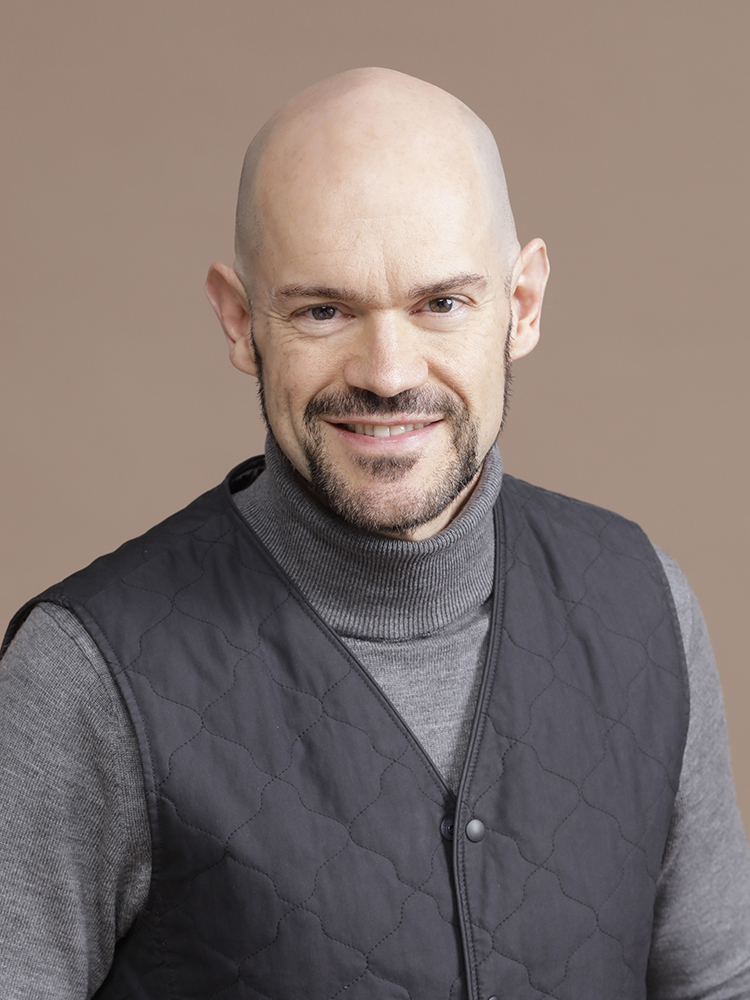
"Gongjon" means "to be together" and the Korean government is working hard to help Koreans understand about the many people from other countries who live together with Koreans in Korea. Gongjon focuses on publishing articles about non-ethnic Koreans living in Korea and they interviewed me for a recent article.
My latest column for Seoul Magazine discussed the value of network building in Korea and some tips on how to leverage business cards for success in Korea. To go deeper into this topic, visit the links below:
An Example of Long-Term Business Networking in Korea - Business in Korea is not for those with a short-term horizon. This post includes both a response about networking which I posted recently on Korea Business Central, as well as a short video describing a long-term business networking process.
Message to An Associate On Being Successful in Korea - Network building in Korea involves giving first and receiving second. This post from early 2010 includes insights into how to truly build meaningful business relationships.
I'm often a little surprised how easy people think doing business in Korea is going to be as a foreigner. Sure, teaching English is a piece of cake. But to move beyond this takes a long-term time-horizon and hard work.
I was contacted by a member on KBC asking about getting connections in a specific Korean industry last week and I suggested he post his comment to one of our online discussions about business networking. Here's the advice I gave him:
"Koreans are great at organizing groups, seminars and online forums for specific interests. Accessing them without Korean-language ability can be tough, but with persistence, shouldn't be impossible. I understand from your email this week which you sent, you're looking for connections in the Korean film and television industries. As a first step, I'd encourage you to visit our next meeting of the Brand and Culture Forum, which will probably be the last week of August. We have some people in that group working in the Korean TV industry; you should definitely share your business card with them.
However, networking in Korea is about more than just meeting people and exchanging business cards. One of these days, I'm going to write a piece describing every link in the multi-year chain leading to some of the opportunities that have come my way. They came from establishing and maintaining long-term relationships that were based on more than just a specific objective in mind and from giving as much as getting. To move past the easy stuff (English teaching, for example) takes a lot of hard work over a long period of time. If you put in the effort, adapt to the Korean approach, and stick around long enough for the rewards, you'll eventually find yourself moving up."
In fact, this discussion got me thinking a bit more about business networking in Korea and I put together the following video this morning for our KBC Community Soapbox about just how long-term a networking process can take, and I'm sure in a few years, I'll be able to add yet more links to this chain, which will likely continue through to the end of my career:
Understanding Korea and Koreans from the wider geopolitical context yields important insights into the newly confident nation we find today. Anyone doing business in this dynamic economy can expect to increase their effectiveness by learning about recent Korean history and its position in the region.
Mark Minton boasts of a long history in E. Asia, as a US diplomat in Japan and Korea, and later in Mongolia as US Ambassador. In this discussion with KBC host Tom Tucker, Ambassador Minton shares deep insights about modern Korea and doing business there.
Click here to listen to the interview, download the .mp3, subscribe in iTunes, read the transcript and or discuss this interview and this topic with other members of Korea Business Central visit the English-language discussion link.
Click here for the full list of interviews in the 2011 Korea Business Interview Series, or here for the 2010 interviews.
I also tried something new this time, which was to prepare my own short video synopsis of the interview:
Main Points of the Interview
Topic #1 - Ambassador Mark Minton and The Korea Society, An Overview
In between stints in Asia, Ambassador Minton also spent long periods of his career in New York City, with the Foreign Service, as well as the US Mission to the United Nations, and now with the Korea Society. He notes that in the short period of time between his previous time in NYC and now, the profile of Korean culture films and arts has risen dramatically.
The Korea Society is the foremost and oldest non-profit private organization in the US dedicated to expanding understanding of Korea in the US and promoting exchange between the American and Korean people. It was established by General Van Fleet, who had been a US general in the Korean War. The Society has grown along with the increasing success of Korea.
Lately the Society has been active in promoting Korean film with the Museum of the Moving Image in New York though a large, annual film festival.
Topic #2 - The Korea-Japan Relationship
The relationship between Korea and Japan has been difficult, perhaps because the two countries are so close in proximity but have distinct cultures. This historical friction is dissipating quickly with the younger generations in each country extremely interested in each other. Tourism is rising fast.
The interests of the two countries, being successful economies and democracies, are converging in the modern era. The current administration of Korean President Lee Myung-bak has handled relations with Japan with a mature, sophisticated and sensitive approach.
The Japanese have looked at the Korean achievements of the last 25-30 years and truly respect it and have been impressed by it.
Japan was the first East Asian country to successfully modernize and as Korea was a late-comer to this development, Korean President Park Chung-hee, explicitly folled Japanese models, though he used them with Korean characteristics. Today, Korea is increasingly innovating on its own.
It is clear that there's still a symbiotic relationship between Japan and Korea, but Koreans will expand even further to take on other partners, especially as Korea signs FTAs with more and more other countries and sells its products around the world.
Topic #3 - The Korea-Mongolia Relationship
Ambassador Minton served as US Ambassador to Mongolia from September 2006 until September 2009.
Mongolia is the only true democracy in central Asia, making it politically and culturally unique in the region. It is located between China and Russia and so its foreign policy is to reach out to the broader world, economically, policically and diplomatically, so that it has options beyond just China and Russia.
Mongolians consider Koreans to be the closest people in the world to them. History shows there has been some migratory connection between Mongolia and Korea in the past, and the two countries share cultural characteristics, which makes Mongolians feel comfortable dealing with Koreans.
Going forward, we will be hearing more and more about Mongolia as world-class mineral assets in uranium, coal, copper, gold and others come online. Major mining companies are just now beginning to develop these assets, which are some of the largest undeveloped deposits in the world. It is expected that the Mongolian economy will start growing at around 10% per year over the next decade.
Korea is looking to Mongolia as a source of raw materials, but Korean construction companies are also well-placed to build the infrastructure that Mongolia is going to need for its new economy.
Mongolia may also become an attractive tourist destination for Koreans, as it's only two and a half hours by plane from Seoul. There is a lot of open space and beautiful scenery.
China is the 800-pound gorilla in the living room for Mongolia, which dictates that China will be the major customer for Mongolian resources. But Mongolia is also looking to develop other partnerships, and Korea has a major role to play in this.
Topic #4 - Significant Events in Modern Korean History
The Korea Society recently held a seminar to discuss the new book "The Park Chung Hee Era". President Park is the modern figure who transformed the Korean economy and created the foundation for what the Korean economy has become today.
There is a lot of debate even today about the extent to which the policies of the Park era may have retarded political developments of the country.
Looking at the major events of modern Korean history, we can see that each led to the next. The Park Chung Hee coup d'etat of 1961 fired the trigger, but its success in raising the living standards of Koreans lead to protests for more freedoms with the Gwangju Uprising in 1980 and the June Democracy Movement of 1987, and ultimately to democracy.
Topic #5 - Korean Viewpoint on the Signing of FTAs
By signing FTAs with the US and with the EU, as well as other countries, Korea is looking to draw itself closer to these major Western economies, which will have all sorts of positive payoffs and benefits for the relationship as a whole, including as a counterweight to China as Korea's trade with China increases.
In addition, the US-Korea FTA is so complex and well-considered that it reaches into so many regulations, laws and practices, that when it is implemented, it will have an effect of enhancing the efficiency and transparency of the Korean domestic economy and the way it is managed, bringing Korean activities up to international norms.
Topic #6 - "The Hub of Korea"
Korea has considerable assets to become a hub. It is geographically positioned this way in northeast Asia and is complemented by the marvelous Incheon Airport, as well as Songdo city, which is an attempt to create virtually a complete new city oriented towards international commerce and business.
Korea also has a role to play as a hub in the politcal dimension, too. As host of the G20 meeting last year, as of the Nuclear Nonproliferation Summit next year, Korea is increasingly becoming a kind of honest broker in international politics, as well as diplomacy. This is reinforced by the symbolism of the re-election of Korean Ban Ki-moon as Secretary General of the United Nations.
Topic #7 - Wrap-Up
When we think of "Korea" these days, we inevitably think of something contemporary first. A good keyword to use to describe Korea would be "successful innovation", not only in economics, but also in political, cultural and international diplomacy, too.
Going forward, The Korea Society is looking to capitalize on "Hallyu", or the Korean Wave, which is beginning to take hold in the United States as well. There's a growing awareness of the world of arts and design in Korea, particularly Korean film and literature.
There are few people more qualified to discuss the Korean economic miracle than Peter Bartholomew. Having arrived as a Peace Corps volunteer, he has remained in Korea almost continuously since 1968. Peter worked in a Korean company for almost a decade in the 1970s, and for the last 28 years, he has run IRC, Ltd. in Seoul, specializing in the shipbuilding and construction sectors.
In this interview, Peter shares deep insights about Korean business, including techniques for negotiating with Koreans, as well as about efforts to preserve traditional hanok homes, an area on which he is particularly passionate. He believes that a modern Korea should be compatible with maintaining the natural and historical assets of the past.
Click here to listen to the interview, download the .mp3, subscribe in iTunes, read the transcript and or discuss this interview and this topic with other members of Korea Business Central visit the English-language discussion link.
Click here for the full list of interviews in the 2011 Korea Business Interview Series, or here for the 2010 interviews.
Main Points of the Interview
Topic #1 - Personal Background in Korea
Peter arrived in Korea in January 1968 with the US Peace Corps and spent five years along the northeast coast of the country. He started working for a Korean company in 1972 and stayed there for eight years. In 1982, Peter founded IRC with some partners and is still operating the company today.
The biggest change in Korea over the last forty years is the economic development of the country. Even in the 1970s, there were virtually no paved roads in the countryside and even electricity wasn't widespread. Cars shared the road with oxcarts. There were no highways and very little manufacturing; it was primarily an agro/fisheries economy.
Koreans today can be described with words like persistence, hardworking, impatient, aggressive and hungry for knowledge. Friendships in Korea last a long-time.
Topic #2 - Shipbuilding in Korea
The three big shiyards in Korea are Hyundai (80-85 ships per year), Daewoo (40-50 ships per year) and Samsung (40-50 ships per year).
STX's shipyard in Korea is small but they have built a new shipyard in Dalian, China. Hanjin's is the oldest Korean yard, located in downtown Busan, but they've also got a huge shipyard in Subic Bay, Philippines, too.
The Korean majors are notable for their diversification, having expanded into offshore oil and gas structures, as well as drilling ships.
Peter's role at IRC is to organize custom shipbuilding programs for vessels that have never been built before. He identifies the best Korean resources (not just shipyards, but also specialist services and products) and helps in negotiating the deals, having completed over 100 projects in the last thirty years.
Koreans shipbuilders have a diversified spectrum of products, not just ordinary container ships and bulk carriers, but also sophisticated L&G carriers and others, such as the new types of structures for the offshore industry, as well as industrial structures build in modular form to be assembled on-site. This diversification gives Korean makers longer-term stability.
The core speciality in Korea is production engineering and productivity. This has been achieved by taking the industry to a new level of high tech, with exensive automation, excruciatingly sophisticated computerized control of production and scheduling. They are at least as good as the Japanese, but much better than the Europeans and Chinese in this regard.
The Chinese can be expected to take more and more of the low-cost/low-tech business from the Koreans, but the Koreans are moving up the value chain quickly.
The Koreans also benefit from a strategic mistake the Japanese made many years ago where they decided to emphasize pre-designed standardized ships. This limits the Japanese' ability to produce new designs.
It should be remembered that shipyards are really just huge, multi-disciplined industrial structure manufacturing facilities. Among those structures, some float and some don't. As the Koreans are strong in this aspect of finding new ways to excel, we can expect them to keep diversifying, including into the green energy industrial structures, such as large turbine windmills. The Koreans are also expanding overseas, as mentioned above, and STX even owns yards in Europe.
Topic #3 - Korean Business in General
The Korean conglomerates ("chaebol") are moving from strength to strength and this success can be expected to continue. But what the Japanese have that the Koreans don't have is a strong small- to medium-sized company community. The Koreans are too dependent on the chaebol and this is a major weakness of the Korean economy.
Korean business is weak in services and in many aspects of management. There's high productivity on the shop floor, but low productivity in the office and in software.
When comparing Korea with Japan, it's also helpful to remember that Japan started industrializing nearly 100 years before Korea and so the Korean economy is like a cake that's grown too fast; it's all full of holes. Now Koreans are going back and filling those holes, one-by-one, but it takes time.
Korean young people are going overseas to study in record numbers and they're bringing back new and innovative ideas. Once the generational shift kicks in and and the new generation moves into positions of power, the shift to a stronger small/medium-sized company sector, as well as better software and management capabilities, will take place.
Changes in Korea won't come from hiring in foreigners to positions of management authority but through an evolutionary, incremental process, developed within the crucible of Korea's own cultural persona and psychology.
Topic #4 - Negotiating with Koreans
When negotiating with a top-end multinational Korean company, the people there will have broad, international exposure and experience so negotiations can take place on international terms and conditions.
Koreans are price buyers and so if you're trying to sell to Koreans, once the basic qualifications are set, the Koreans are really only interested in price.
Unsophisticated small/medium industry companies get upset when they see a Western contract. Contracts between Koreans are often shockingly short, naming what the product is, how much and that's it. It's a totally different concept toward documentation and legal contracting.
So what the foreigner has to do to achieve his ends is to do adequate advance research. What kind of entity is the Korean party which whom he's negotiating? What previous contracts or negotiations have been accomplished? Which are successful and why? The Western company should approach the negotiations based on this.
When dealing with a small/medium industry company, a full-blown 25-page contract is a non-starter. The contract must be boiled down to basic, fundamental, can't-live-without-it terms and conditions. Everything has to be done in Korean, with some kind of legal and language assistance along the way.
A good way to bring a drawn-out negotiation to a close is to offer to split the difference 50/50.
When negotiating, make sure to always ask yourself "Do they really undderstand the points I'm trying to get across?". Continuously summarize in simple form. List clear, short options. This is because there aren't just language problems, but also cultural psychology difference problems. 60-70% of the major contract disagreements are caused by a failure to understand at the beginning.
Topic #5 - Hanok and the Korean Land Development Model
Peter has lived in the same Korean traditional style house ("hanok") for the last 35 years. Recently, the city government tried to demolish it to make way for a new development but Peter and a group of neighbors joined forces to successfully block this in court.
Koreans don't put value on old buildings. In the US and Europe, we can find many old style homes that are more than 100 years old. But in Korea, after 20 years, a building doesn't have any value; only the land has value.
Even restoration projects often involve tearing down old and replacing with new construction, such as the current "rebuilding" of the traditional south gate to the city of Suwon.
The years of rampant development, destroying old neighborhoods and natural beauty, to build new cities and developments is finally coming to an end. Ultimately, the government must stop deciding and planning these things without consideration for the market and environment.
Topic #6 - Wrap-Up
The position of Korea between China and Japan is absolutely ideal for Western companies looking for a base in north-east Asia. IRC is actively seeking companies whose services and/or products would be valuable in Korea, in order to support them in this process.
The key factor of doing business successfuully in Korea and in Asia is to do your homework about the companies or government entities with whom you need to interface to achieve whatever business aims you have. Don't assume that business is done everywhere the same or that there's going to be a magic bullet.
When Korea Business Central asked Dick Warmington to do an interview for us, we just expected that he'd have great insights about Chadwick International School, Korean education and Songdo city. We didn't realize he'd also previously run the operations of Hewlett-Packard in Korea during the late 80s and early 90s, and then HP's entire Asia Pacific operations through the Asian IMF Crisis of the late 1990s. We also didn't realize that Chadwick School breaks the mold for international schools by mostly educating Koreans AND bringing a new, pioneering model to education in Korea. One also can't help but get a little more excited about Songdo after listening to Dick gush about its uniquenesses.
This interview is inspirational as well as enlightening... It covers lots of ground as Dick shares insight after insight about Korea, Korean education and Korean business.
Click here to listen to the interview, download the .mp3, subscribe in iTunes, read the transcript and or discuss this interview and this topic with other members of Korea Business Central visit the English-language discussion link.
Click here for the full list of interviews in the 2011 Korea Business Interview Series, or here for the 2010 interviews.
Main Points of the Interview
Topic #1 - Background to Joining Chadwick International in Songdo
Dick graduated from Chadwick School in Los Angeles fifty years ago, before going on to study at Stanford and Harvard. He joined Hewlett-Packard, spending 33 years with the company.
Under Dick's leadership, HP established a joint venture in Korea with Samsung Electronics. In 1997, HP bought out Samsung's share and now owns 100% of HP Korea. Later, Dick finished his career in Hong Kong as CEO of HP's Asia Pacific operations, guiding the company through the Asian Financial Crisis of 1997.
During retirement, Chadwick approached Dick to run their new branch school in Songdo, which he joined in early 2010. This was a perfect match for Dick thanks to his background in Korea and Asia, as well as a long-term interest in independent education, including the fact that his two children are Korean adoptees.
Topic #2 - Setting the School Up in Songdo
Songdo is a new, architected city, the center of which is being developed by Gale International, a private US-based corporation. It was started around 2000, very close to Incheon Airport. Songdo is also an economic free zone for drawing foreign direct investment into the area and an international school was a prerequisite for attracting international families.
Setting up a school in Korea requires close work and licensing from the Korea Ministry of Education, Science and Technology. This process was more complicated than expected, meaning that the school opened about five months later than planned.
Chadwick International in Songdo currently offers grades K-7, with 280 students and 40 international educators. The official opening was September 10, 2010, and most students are ethnic Koreans.
The Songdo school is a branch of the K-12 Chadwick School in Palos Verdes, California, which has enrollment of about 850 students and which has a 75-year history.
Support from the city of Incheon, which is the larger metrolitan area under which Songdo city is chartered, continued smoothly even when the mayor who had previously championed the city lost in the 2010 elections and was replaced by a new mayor from the opposition party.
Topic #3 - Education at Chadwick and Korea At Large
Koreans put a lot of emphasis on education and this comes from the Confucian background where education is fundamental to success. It is traditionally a rote-based system and objective testing is the means through which universities admit their students.
Chadwick, on the other hand, focuses on teaching critical thinking and creative thought processes. The program is experiential-based and rather than lecturing; teachers are facilitators. There is a lot of group work. Chadwick is using the International Baccalaureate program structure to deliver the subjects, and technology is heavily incorporated into the learning, with every student from the first grade required to have and use a computer.
The school hopes to be an example in Korea of alternative ways of approaching education and a lot of effort goes into educating families on this progressive approach. The kids enjoy their education and it's sometimes hard to persuade Korean parents that this is a good thing and will lead to them to become lifelong learners.
Because English is not the first language of most students in the current Chadwick International student body, the school is having to put an extra effort into bringing up their English skills, and computers are an integral part of this process. Things are still a work-in-progess, though.
Within the traditional Korean school system, class sizes of 30-40 are about average and after-school learning in private "hagwons" is prevalent. This means kids often study all day and then all afternoon and into the evening in order to cram as much learning in as possible, stunting their social skills, creative skillsand critical thinking skills development.
In fact, up to 25,000-30,000 Korean families have moved to other countries, such as Southeast Asia, the US, Canada, Australia and other places to give their children alternative learning environments.
Because of these realities in the Korean school system and the difficulties in changing them, the Korean government has been active in attracting international schools, such as Chadwick, into the local market.
Chadwick is engaged in sharing about its approaches within Korea, including ongoing communications with the Ministry of Education and the filming of documentaries about the education being delivered.
Topic #4 - About HP Korea and Korean Business
Setting up the HP subsidiary in Korea was a fascinating experience for Dick as HP was trying to introduce a Socratic Western business culture into a Confusion-based society. For example, in the Confucian structure mistakes are punished; in the HP approach, if you don't make mistakes, you're not doing your job. In a typical Korean company, decisions don't get made at low levels but in HP, employees get a lot of authority in their jobs.
Samsung was uncomfortable with the chaos in the HP Korea workplace, but HP was also their most profitable, fastest growing operation at the time and they learned a lot. HP started with 130 employees from Samsung Electronics when forming the company and when given the opportunity to return to Samsung after five years, not one person returned.
Success comes from getting agreement on objectives, but how those objectives are accomplished can vary. This lesson is serving Dick well in his current position at Chadwick, too.
In 1997, with the Asian Financial Crisis, HP top management saw the potential in the market and made the company's heaviest investments in Korea. HP bought a building, bought out the shares from Samsung and made other investments totally close to $300 million in 1997.
Topic #5 - Korean Challenges for the Future
Challenge #1 for Korea is the low birthrate of just 1.12 children per family. Overcoming the issue of a declining population will be difficult.
From a business perspective, another challenge is finding ways to support the growth of smaller companies. This is necessary for maintaining a good, healthy growth rate in the country.
And moving the education from traditional approaches to a more experiential-based method is a third major challenge for Korea going forward.
Topic #5 - Songdo City
The city is currently about one third built out and is still following its original architected plan drawn up in the early 2000s. Total area is about 1,500 acres, with 85,000 people expected to move in eventually. Avenues are wide; parking is underground. The city is built on filled-in wetlands. Buildings are modern; lots of glass. The city is built to environmentally-friendly standards, including areas like transportation, trash, sewage and materials used. Communication and transportation are integrated. POSCO Engineering & Construction's new headquarters, which is being built in Songdo, will be Korea's tallest building. The city is safe, people ride bikes and the air is clean. Getting to Seoul takes about 45 minutes. There is even a Jack Nicklaus golf course built here.
Topic #6 - Winding Up
The top goal for Chadwick over the next 5-10 years is to graduate the first class in 2015 with the same characterstics as the school's students graduating from Chadwick in Palos Verdes. The school is also striving to get parents to truly appreciate what their kids are getting at Chadwick.
To understand Songdo, visit Songdo. This "aerotropolis" will serve as an example to city developers in the future
From 2008 until the end of 2010, LG Electronics did what’s never been done before in Korean business. The company brought in five foreign executives to help bring the company up to international standards in a variety of areas. The experiment is over though; all the non-Korean executives have moved on, and LG Electronics is back in the hands of Koreans only, leaving a lot of unanswered questions about how prepared Korean multinationals are to become truly multinational.
Didier Chenneveau was one of the foreign executives and he served as Senior Vice President and Chief Supply Chain Officer for over two years. His insights from the experience are valuable for anyone interested in doing business in Korea, because they explore the limits of Korean business culture, the ways for Korea to improve and implications for others in making a success of their positions within Korean corporate business.
Click here to listen to the interview, download the .mp3, subscribe in iTunes, read the transcript and or discuss this interview and this topic with other members of Korea Business Central visit the English-language discussion link.
Click here for the full list of interviews in the 2011 Korea Business Interview Series, or here for the 2011 interviews.
Main Points of the Interview
Topic #1 - Background to Joining LG Electronics
Didier started at Caterpillar in Switzerland for three years and then moved to HP for about 17 years, both in Europe and the US.
He wanted to work in Asia and the vision of LG Electronics' new CEO Young Nam in 2008 to globalize the organization was inspiring enough for Didier to join as Chief Supply Chain Officer. Around that time, other foreign executives took C-level positions in marketing, procurement, strategy and HR.
Topic #2 - Getting Started at LG Electronics
LG's intention by bringing in foreign executives was to improve the Korean model by making the company management reflect the global nature of LG's business. The need to do this is well illustrated by the fact that almost no Korean executives have moved on from Korean companies to successfully run foreign corporations.
Didier's primary role was to aggregate the supply chain function across the organization, which included creating a vision for the function, bringing in best practices from outside, promoting more outsourcing, setting up KPIs and building an IT system to support it.
The CEOs globalization vision was good and public statements by the company about it were sincere and correct. There was push-back within the organization though from those who didn't understand or who felt threatened by the changes.
Topic #3 - Supply Chain Management from a Korean Perspective
Korean company supply chains are similar to a Japanese model. Those of large Korean conglomerates are generally run through an internal logistics company. Supply chain management operates through an end-to-end approach rather than being open and collaborative with other partners.
The biggest achievement Didier accomplished was around inventory management and supply/demand matching, as well as outsourcing.
The lack of IT systems was a major non-cultural issue for improving supply chain management since information technology wasn't a strategic priority in the company.
In regard to smartphones, Korean companies have tended to focus too much on manufacturing, where little value is added. Instead, outsourcing these portions to others and focusing on product development would be more advantageous. LG smartphones have succeeded in the area of design, and leadership can be regained by focusing on innovation, understanding customer needs and creating better partnerships.
LG's position on Garner Group's index of the world's best supply chains went from 65 in 2007 to 27 in 2010, a notable outside confirmation of Didier's success in his position.
Topic #4 - Cultural Challenges of Working in the Korean Workplace
LG is still a very hierarchical organization with huge respect for authority. The foreign executives had trouble getting into that culture. Evening social drinking was not easy to go along with on a continuous basis.
Language was also a big barrier. Even with interpretation, there's a lag in the conversation, and it's difficult to pick up all the nuances. Staff meetings started out in English, but this stopped early and went back to Korean. Efforts to introduce English into the workplace were not as robust as was widely publicized outside the company.
The concept of an open door policy was not generally accepted even though Didier worked hard to get his subordinates to follow it.
Relationships with peers were professional, but not warm, in part for language reasons and the unwillingness of foreign executives to engage in the after-hours drinking. The foreign executives were respected for their knowledge and expertise but Korea still remains a very close, structured and hierarchical culture.
Consensus in Korea often felt like a one-way thing. To achieve results, the foreigners had to build consensus with the Koreans, but they didn't always feel that the Koreans made the same effort to bring the foreign team into the consensus process for Korean-promoted initiatives.
Didier's was able to get his direct approach to discussion and decision-making across to his staff. The first time he asked "What do YOU think?", they were surprised. The reaction was, "You're the bosss. You tell me what I'm thinking. You tell me what to do." With time though, they grasped it, understood it and achieved good results.
Topic #4 - The Departure of the Foreign CEOs
When word got out at the end of 2010 that the foreign executives were all leaving, many outside the organization were surprised. The simple answer for the changes is that a new CEO came in and decided to take a new direction. In fact, the new CEO never even met the foreign executives for the last three months of their contracts, even though they were still on the payroll.
Overall, Didier's time at LG was very positive for him. If he had to do it over, he'd want to have been sure that the CEO had a long enough mandate to achieve his changes. The rotation of executives in Korean companies every three to four years is institutionalized and puzzling.
Korean companies need to look at the markets they serve and ensure they have people in positions of responsibility who are able to understand those markets. This is what CEO Young Nam understood.
Topic #5 - Wrapping Up
Living in Seoul as a foreigner is OK, but not great. It's a hard place to speak English, in spite of the efforts Koreans make to learn English. It's hard to make local friends. There are lots of great restaurant and museums. Spring and fall are beautiful. The skiing is nice.
Asia is where exciting things are happening in the world in terms of supply chain management, thus Didier is now running and expanding CEVA's operations in Asia.
New graduates looking to excel in Asia should make sure to work in companies from more than one country.
Korean companies are great at manufacturing, but there's still the question of innovation and whether Koreans can excel in the businesses of the future.
Everybody's heard that "saving face" is important in Asia. It turns out Koreans think the Japanese place particular importance on this. But on a recent discussion on Korea Business Central, a member familiar with Japan mentioned that Koreans take the concept of "saving face" to a whole new level, and later clarified that he thinks it's the same in both countries but that each culture manifests it differently. I, on the other hand, have some suspicions about the whole thing. The following is what I posted in response:
I harbor a suspicion that the supposedly unique Asian characteristic called "face" is a figment of people's imagination.
Perhaps some Westerner long ago traveled to the Orient and found it to be a mysterious place. One day, he learned that the Asians even have a word for one's sense of personal dignity ("chaemyun" in Korean) and observed that we don't have a word for it in the Western languages (well, we do, but it takes us several words to make the phrase.. it's called, "sense of personal dignity") and he and the Asians all got excited about this newly found trait that nobody'd noticed until then.
Before you knew it, the concept had taken on a life of its own and it was used to explain all kinds of odd behavior and it became generally accepted that Asians will do anything to "save face" and that this makes them special and hard to understand. I guess that means Westerners don't really give a damn if we're insulted, shamed or otherwise made to feel less than special.
I'm certainly open to other opinions (and very likely I'm wrong here), but I do suspect there's not much to the chaemyun myth at all.
A member on Korea Business Central seems to be losing enthusiasm for studying Korean and posted a discussion question this week asking what he's really going to get out of the effort if he just wants to work in Korea. Seeing as how Koreans in business generally want to learn English and often don't place value on the efforts of foreigners to learn Korean, it's not hard to understand this KBC member's doubts. I think it takes a deeper perspective to fully appreciate the situation; here's how I replied to him:
"This is a very interesting question because it seems like the answer should be obvious, but as you pointed out, it's not.
Nobody is going to hire you in Korea simply because you speak Korean well. Why would they? And having mediocre Korean in the workplace is no better than no Korean at all, in most situations. In general, I've found that Koreans trying to learn English are less than thrilled to meet Korean-speaking foreigners, unless the foreigner's Korean is significantly better than their own English. And I definitely agree that getting from intermediate to advanced is going to take a whole lot longer than it took to get from beginner to intermediate.
But I don't think this is the whole story. If you speak Korean, then you're not left getting only the information Koreans choose to share with you; you've got direct access to the "primary sources". This is extremely important in countless subtle ways. And as David Yeo shared above, you can build stronger bonds with those around you both through the language and through cultural understanding (though I don't necessarily agree that Korean is better suited to emotional expression than English; both languages seem equally robust in this regard).
I think you also earn respect from Koreans you work with if you prove your mettle through Korean skills, and this can be a huge asset in business. Don't underestimate the value here. Foreigners who've been in Korean for decades but haven't learned Korean properly are kidding themselves if they think the Koreans around them don't look down on them, at least in limited ways, and this is in spite of what Koreans will tell them. Ironically, I find that foreigners who've learned Korean tend to be more understanding of Korean shortcomings (especially lack of English skills) than those who haven't learned Korean.
If you've got language skills in a business setting, it means you're closer to functioning as an equal and not as someone who's there as an English chat buddy and/or who continuously needs to be explained to. If you see yourself staying and working in Korea over the long-term, I encourage you to redouble your language learning efforts and to never be satisfied with your current ability level."